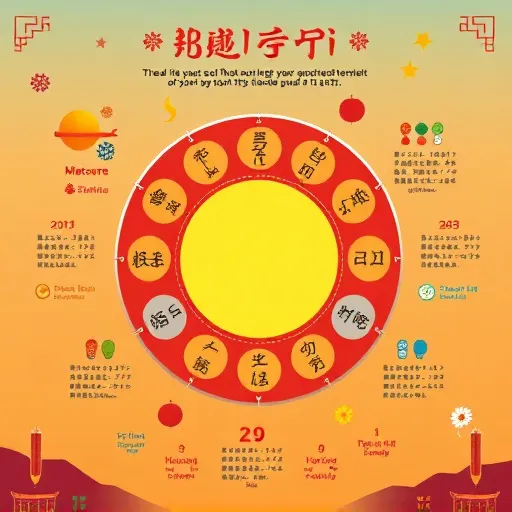
Bazi Four Pillars of
What Is Bazi, and Why Does It Matter for Color Choices?
Bazi — often called the Four Pillars of Destiny — is a traditional Chinese astrological system that takes your birth data and maps it into four pillars, each one built from a Heavenly Stem and an Earthly Branch. Those eight characters (yep, "bazi" literally means "eight characters") paint a picture of how the five elements were balanced at the exact moment you were born. The elements are Wood, Fire, Earth, Metal, and Water.
Here's the big idea: every element carries its own qualities, and each one links to specific colors. When your chart leans heavily toward one element — or is missing another entirely — color becomes a subtle but surprisingly powerful rebalancing tool. Your wardrobe, your home decor, even your digital workspace can act as an ongoing energetic adjustment. That's really the foundation of how to find your lucky color in bazi.
Lots of modern practitioners call this "elemental personalization" — a way to make daily choices that work with your natural strengths instead of fighting them. And honestly? Even if the metaphysical side leaves you skeptical, the simple ritual of paying attention to color and noticing how it makes you feel has genuine psychological value. Understanding how to find your lucky color in bazi starts with that curious, open mindset.
The Five Elements and Their Lucky Color Correspondences in Chinese Astrology
Before you can find your personal lucky color, you've gotta understand the color-element correspondences. Here's the standard mapping most practitioners use in 2026:
- Wood — Green, teal, and every shade of leafy or forest green
- Fire — Red, orange, pink, and vivid magenta
- Earth — Yellow, beige, terracotta, and warm browns
- Metal — White, silver, gold, and metallic tones
- Water — Black, navy blue, charcoal, and deep indigo
Some of these feel intuitive (fire = red, obviously), while others are less obvious (water = black, because classical thought holds that deep water looks dark and absorbing). A trained Bazi consultant will tell you these associations aren't random at all — they follow the generating and controlling cycles of the five elements, which is exactly where we're headed next. Knowing these correspondences is step one for how to find your lucky color in bazi.
The Generating and Controlling Cycles as the Engine Behind Lucky Colors
To truly grasp how to find your lucky color in bazi, you need a working feel for two cycles:
The Generating Cycle (Sheng): Wood feeds Fire, Fire creates Earth (ash), Earth produces Metal, Metal carries Water (condensation), and Water nourishes Wood. This cycle is all about support and nourishment. If your chart is weak in a certain element, the element that generates it becomes a supportive ally — and its color becomes a lucky one for you.
The Controlling Cycle (Ke): Wood controls Earth, Earth controls Water, Water controls Fire, Fire controls Metal, and Metal controls Wood. This cycle describes restraint and tension. If an element in your chart is overly dominant, the element that controls it can serve as a balancing or "remedial" color.
This is why two people born in the same year can end up with completely different lucky colors. It's not about your zodiac animal — it's about the specific configuration of your elemental balance across all four pillars. That distinction is huge when you're learning how to find your lucky color in bazi.
Step-by-Step Process: How to Find Your Lucky Color in Bazi
Alright, let's get practical. Here's the process broken into clear stages.
Step 1: Gather your birth data. You'll need your birth date, time, and location. Birth time matters a lot in bazi — it determines the fourth pillar (the hour pillar), which can shift your chart's balance significantly. If you don't know your exact birth time, a Bazi consultant or an online destiny analysis platform can sometimes help you estimate it through a technique called "birth time rectification," though accuracy is always best with the real thing.
Step 2: Convert to the traditional calendar. Bazi uses the solar calendar and the 24 solar terms, not the Western Gregorian calendar. Most Chinese astrology software and online bazi calculators handle this conversion automatically — you just plug in your date and time, and the tool outputs your four pillars.
Step 3: Identify your Day Master. Your Day Master (the Heavenly Stem of your day pillar) is the anchor of your entire chart. It represents you — your core self. Every other element gets read in relation to it. If you've ever heard someone say "I'm a Yang Wood person" or "she's a Yin Fire," they're talking about the Day Master.
- Wood Day Masters: colors of Wood, Water (generates Wood), and sometimes Fire (expresses Wood)
- Fire Day Masters: colors of Fire, Wood (generates Fire), and sometimes Earth (grounds Fire)
- Earth Day Masters: colors of Earth, Fire (generates Earth), and sometimes Metal (expresses Earth)
- Metal Day Masters: colors of Metal, Earth (generates Metal), and sometimes Water (expresses Metal)
- Water Day Masters: colors of Water, Metal (generates Water), and sometimes Wood (expresses Water)
This is a simplified starting point. A skilled practitioner will assess whether your Day Master is "strong" or "weak" in the chart, because that flips the logic: a weak Day Master needs support (generating elements), while a strong one benefits from release or control. This nuance is exactly why how to find your lucky color in bazi isn't a one-size-fits-all formula.
Step 4: Assess the overall elemental balance. Count the elements across all eight characters. Is one element completely absent? Is another appearing five times? This is where a proper five elements analysis comes in. The element that's missing or weakest is often the one you want to invite in through color. Conversely, the element that's overwhelmingly dominant might be one to use sparingly.
Pro tip from a seasoned practitioner: don't just count characters — look at the season of birth too. Someone born in deep winter (Water season) has a naturally cold chart and often benefits from Fire colors, even if Fire doesn't appear in their stems and branches at all.
Step 5: Derive your lucky colors. Once you know your favorable elements, translate them into colors using the mapping table above. Most people end up with two to three lucky colors — one primary "support" color and one or two secondary colors. Some practitioners also assign a "caution" color (the element that's already too strong), which you'd use in smaller doses. This is the moment how to find your lucky color in bazi goes from theory to an actual palette you can shop with.
Step 6: Cross-check with a professional or reliable tool. This is where a lot of people get stuck. Bazi interpretation is genuinely nuanced — the interactions between stems, branches, hidden elements, and combination patterns can change the verdict on which elements are favorable. If you're serious about accuracy, run your chart through a reputable Bazi chart reading service or consult a destiny analysis expert. Many metaphysics consultation platforms now offer detailed reports that include a color recommendation section, which is a great starting point for beginners. Treat this step as your accuracy check for how to find your lucky color in bazi.
Why Personalized Color Guidance Matters More Than Ever in 2026
We're living in an era of hyper-personalization. Algorithms curate our playlists, our feeds, and our shopping recommendations. So it makes sense that people are increasingly drawn to systems that personalize something deeper — their environment and self-presentation. In 2026, search interest in personalized color guidance and elemental remedies has kept climbing, especially among younger audiences who treat these traditions as tools for self-awareness rather than rigid fortune-telling.
What's interesting is that many wellness brands and lifestyle platforms have started weaving color-element themes into their product lines — everything from stationery to home textiles. Whether or not the brands themselves frame it as bazi, the underlying logic of color therapy and elemental balance is clearly resonating with modern consumers. That cultural momentum makes how to find your lucky color in bazi more relevant than it's been in decades.
Practical Ways to Apply Your Lucky Colors in Daily Life
Finding your lucky color is one thing — living with it is another. Here are some easy, low-effort ways to bring your favorable colors into daily life:
- Wardrobe: Start with accessories — a scarf, a watch band, a phone case. You don't need to overhaul your closet.
- Workspace: A desk mat, a notebook, or a small plant in your lucky hue can subtly shift the energy of your work area.
- Home decor: Throw pillows, curtains, or a piece of art featuring your color are simple, reversible changes.
- Digital environment: Your phone wallpaper, desktop background, or even the accent color of your favorite apps counts too. In 2026, our digital spaces are as "real" as our physical ones.
- Jewelry and stones: Many practitioners recommend gemstones or beads in your favorable color — a subtle, wearable reminder.
A fashion and color consultant we spoke with noted that people often report feeling more "put together" when wearing colors aligned with their chart. Whether that's the metaphysics or the confidence boost is up for debate — but the effect is real either way. And honestly, that's the fun part of how to find your lucky color in bazi: you get to test it in the real world and see what clicks.
Common Mistakes to Avoid When Using Bazi Color Remedies
Before you go all-in on a single color, keep these pitfalls in mind:
- Don't confuse your zodiac animal with your lucky color. The animal sign is just one of many factors — the Day Master and elemental balance matter more.
- Don't overuse a remedial color. If an element is already excessive in your chart, adding more of its color can backfire. Balance is the goal.
- Don't rely on a single online quiz. Free calculators are fine for a rough idea, but a detailed Bazi chart reading service will give you a far more accurate picture.
- Don't ignore context. Seasonal considerations, combinations between branches, and hidden stems all influence the final recommendation.
Frequently Asked Questions About Bazi Colors and Elemental Balance
Can my lucky color change over time? Yes — and this surprises a lot of people. Bazi systems often incorporate annual and monthly pillars, meaning your favorable elements can shift depending on the current year's energy. In 2026, for example, the annual pillar interacts with your natal chart in specific ways, and a metaphysics consultation platform can tell you whether your color priorities should be adjusted for the year ahead. So how to find your lucky color in bazi is really an ongoing practice, not a one-and-done answer.
Do I need my exact birth time? It's strongly recommended. Without it, your hour pillar is missing, and the elemental balance could be off. If you truly can't find your birth time, a destiny analysis expert may still be able to give a general recommendation based on the three known pillars.
Is this the same as color psychology? Not exactly. Color psychology studies how hues affect mood and behavior in a general sense. Bazi color theory is personalized — it's about your specific elemental configuration. That said, the two frameworks often overlap in practice, and many people find they complement each other nicely.
What if my favorite color isn't my lucky color? That's common, and it's not a problem. Think of your lucky color as a supplement, not a replacement. You can keep wearing your favorite shades while adding small accents of your favorable hues. A Bazi consultant can help you find creative ways to blend the two — and that flexibility is part of the beauty of how to find your lucky color in bazi.
Learning how to find your lucky color in bazi is really a journey of self-discovery. It's less about superstition and more about understanding your own energetic blueprint — what supports you, what challenges you, and how to tilt the scales in your favor through something as simple as the colors you surround yourself with. Whether you're a total beginner or someone who's been exploring Chinese astrology for years, the process gives you a structured, personalized way to make intentional choices every day. So grab your birth data, run a chart, and start experimenting — you might be surprised at how much a single shade can shift the way you feel. And if you want the most accurate result, don't hesitate to lean on a Bazi chart reading service or a trusted destiny analysis expert, because your personal color palette is absolutely worth getting right.