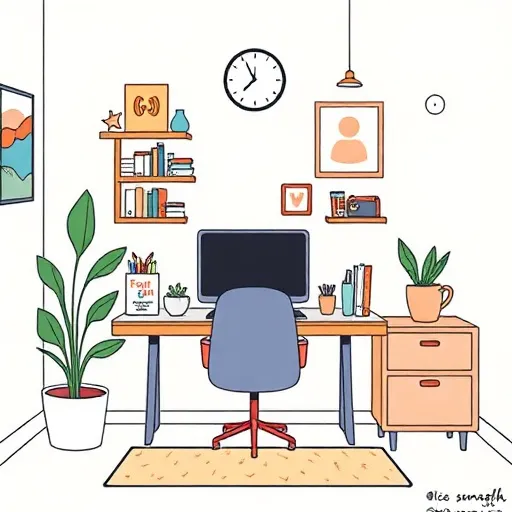
Feng shui home offic
Why Feng Shui Still Matters for the Modern Home Office
Let's kick things off with the "why," because if you're going to learn how to set up a feng shui home office, you deserve to know what's actually in it for you. A thoughtfully designed workspace cuts down on decision fatigue, keeps distractions at bay, and draws a clean psychological line between "work mode" and "home mode." Feng shui tackles all of that through the concept of qi (energy flow), the balance of yin and yang, and the clever placement of the five elements: wood, fire, earth, metal, and water. Think of it as an ancient framework that happens to solve very modern problems.
Here's the thing—professionals who study workplace environments keep landing on the same conclusion: orientation, lighting, and clutter levels massively affect concentration. A 2026 survey of remote workers found that people who described their workspace as "intentional" reported way higher job satisfaction and noticeably lower burnout rates. That's where how to set up a feng shui home office becomes genuinely practical—it hands you a structured way to be intentional instead of just guessing.
The Command Position and Entrance Sightlines: The Single Most Important Rule for Qi Flow
If you take away only one principle from everything here, make it this one. The command position is the seat in a room that gives you a clear view of the entrance without sitting directly in line with it. In feng shui terms, this is where you feel most secure and in control—and that feeling translates straight into focus. Honestly, if you only nail one step of how to set up a feng shui home office, let it be this one.
- Place your desk so you can see the door, but don't face it head-on.
- Never sit with your back to the door—it creates a subtle "what's behind me?" tension that quietly drains your concentration.
- If your desk has to face a wall, put up a small mirror or reflective surface so you can catch the doorway behind you.
- Skip the spot directly under a window when you can; a solid wall behind you (the "mountain") provides real psychological support.
This is the foundation. Everything else in how to set up a feng shui home office builds on top of it.
Decluttering the Workspace, Paper Piles, and Cable Management: Clear First, Decorate Second
In feng shui, clutter is the number one blocker of qi. In practical terms, it's also the number one blocker of focus. Before you buy a single plant or crystal, clear the space—this step of how to set up a feng shui home office costs nothing and delivers the biggest payoff.
- Clear the desk surface. Keep only daily-use items: laptop, monitor, notepad, and one meaningful object.
- Digitize paper piles. Scan documents and store them digitally—2026 tools make this effortless.
- Hide cables. Tangled cords represent stagnant energy and visually stress you out. Cable trays or clips fix this fast.
- Remove work items from view outside work hours. This creates a yin and yang boundary between work and rest.
Clutter-free shelves, drawers, and surfaces let energy circulate—and let your mind breathe. When people ask about how to set up a feng shui home office on a budget, this is always my first answer.
Bagua Mapping and Desk Orientation: Where the Career and Wealth Zones Go
Beyond the command position, the bagua (the feng shui energy map) gives you a framework for deciding what goes where. It divides a space into nine zones, each tied to a life area: career, wealth, health, creativity, and so on. Learning how to set up a feng shui home office with the bagua is easier than it sounds.
Stand at your office doorway facing in. The far-left corner corresponds to wealth, the far-right to relationships, the center to health, and the near-center to career. You can place symbolic items in these zones—but don't overdo it. A single object in the wealth corner (a healthy plant, a small bowl of coins) is plenty.
As for desk orientation, there's no universal "correct" direction, but plenty of practitioners recommend facing your personal success direction, calculated from your birth date and gender. If that feels like too much homework, just prioritize the command position and good lighting—you'll still get the core benefits of how to set up a feng shui home office.
Layered Lighting and Natural Light: The Forgotten Element of Bright Workspaces
Bad lighting is the silent productivity killer. Feng shui emphasizes natural light and balanced illumination, and 2026 research backs this up: exposure to natural light during working hours improves mood, alertness, and sleep quality. Getting the lighting right is a huge part of how to set up a feng shui home office that actually feels good to sit in.
- Position your desk perpendicular to a window rather than directly facing or backing it—this cuts glare and screen reflection.
- Use layered lighting: an overhead light, a task lamp, and ambient light for evenings.
- Dodge harsh fluorescent lighting when you can; warm, adjustable LED lighting is far better for long work sessions.
- Keep a small lamp lit in the wealth corner of your desk during working hours—a classic feng shui move for inviting opportunity.
Five Elements and Color Palette: Wood, Fire, Earth, Metal, and Water in Balance
Color is one of the fastest ways to shift a room's energy. In feng shui, colors correspond to the five elements, and balance is the whole game—you don't want a room drowning in one element. This is where how to set up a feng shui home office gets fun, because you finally get to play with palette.
- Wood (green, teal): growth, creativity, and vitality. Great for a creative workspace.
- Fire (red, orange, pink): energy and passion. Use sparingly—small accents work best.
- Earth (yellow, beige, brown): stability and grounding. Ideal for walls and furniture.
- Metal (white, gray, metallics): clarity and efficiency. Excellent for desks and accessories.
- Water (blue, black): flow and wisdom. Best as accents, not dominant colors.
A balanced office might use earth-tone walls, a wood desk, metal accents, and a small water feature or blue vase. Skip the all-white, sterile look—it feels cold and uninspiring—and skip the all-red room, which overstimulates. Elemental balance is the quiet secret behind how to set up a feng shui home office that doesn't feel like a showroom.
Biophilic Design and Air-Purifying Plants: Living Energy in Every Corner
Plants are the easiest feng shui upgrade you can make. They soften corners, improve air quality, and introduce wood energy. In 2026, biophilic design is a mainstream trend, and for good reason—it's one of the most-loved steps of how to set up a feng shui home office.
- Snake plant: low-maintenance, upright, and excellent for corners.
- Pothos: cascading greenery that thrives in low light.
- ZZ plant: nearly indestructible and visually striking.
- Bamboo: a classic feng shui plant symbolizing growth and resilience.
Avoid plants with sharp, spiky leaves near your seating area—they create "poison arrows" in feng shui terms. Round or soft-leaved plants are preferable. Also steer clear of dried or dying plants; they represent stagnant energy.
Poison Arrows and Sharp Corners: Softening Bookshelves, Filing Cabinets, and Exposed Beams
Poison arrows are sharp corners, protruding edges, or pointed objects aimed at your workspace. In practical terms, they're visual irritants that create subtle unease. Common culprits in a home office include the corner of a bookshelf or filing cabinet pointed at your chair, sharp-edged monitor stands, open shelving with exposed brackets, and angled walls or exposed beams above the desk. Knowing how to handle these is a key part of how to set up a feng shui home office that feels calm instead of edgy.
Softening solutions: drape a plant over the corner, round off sharp edges with fabric or padding, or reposition furniture so nothing points directly at your seat. If you have an exposed beam overhead, a fabric canopy or a tall plant can help mitigate the "pressure" it creates.
Entryway Thresholds and Room Dividers: Separating Work Zones from Living Areas
The entrance to your home office matters in feng shui—it's where opportunity and energy enter. Keep the doorway clear. Don't store boxes or shoes in front of it. If your office opens directly off a busy hallway, consider a small rug or a plant to create a threshold between the outer world and your work zone. This is the most overlooked step of how to set up a feng shui home office, and it makes a real difference.
If your office shares space with a bedroom or living area, create a visual divider—a folding screen, a bookshelf, or even a curtain—to establish energetic separation. This matters big time for maintaining work-life boundaries.
Technology Placement and Monitor Height: Managing Screens, Routers, and Qi Flow
In 2026, your home office is dominated by screens and devices. Feng shui doesn't prohibit technology—it just asks you to be conscious of it. Here's how to handle the tech side of how to set up a feng shui home office.
- Keep routers and power strips away from your seating area to minimize both electromagnetic clutter and visual mess.
- Position your monitor at eye level so you're not hunched—posture matters for qi flow through the body.
- Hide cables and go wireless where possible.
- At the end of the workday, close your laptop or cover your monitor—a simple ritual that signals "work is done" to your brain.
Symbolic Objects and Personal Touches: Meaningful Decor Over Generic Trinkets
Feng shui objects are only powerful when they mean something to you. A generic "wealth frog" you bought on impulse won't do much. Instead, choose items that genuinely evoke success, calm, or inspiration—this is the heart of how to set up a feng shui home office that reflects you.
- A framed photo of a place that makes you feel expansive
- A small bowl of natural stones or crystals you find beautiful
- A meaningful quote, handwritten and pinned above your desk
- A small water feature or a simple glass of water in the career zone
- A round object—a brass sphere or smooth wooden bowl—to soften sharp corners
Less is more. One or two meaningful objects outperform a shelf full of trinkets.
Sound, Scent, and Air Quality: White Noise, Aromatherapy, and Fresh Qi
Feng shui extends beyond sight. Sound and scent influence the energy of a space just as much as arrangement—and they're the finishing touch on how to set up a feng shui home office.
- Sound: A small fountain provides gentle white noise and introduces water energy. Wind chimes near a window can soften harsh corners and lift qi.
- Scent: Citrus and peppermint are energizing; lavender and sandalwood are calming. Use a diffuser or a candle during focused work sessions.
- Air: Open windows regularly to refresh qi. A small air purifier is a practical 2026 investment, especially in small home offices.
Common Mistakes and Ergonomic Pitfalls: overcrowded Bagua, Death Position, and Under-Desk Clutter
I've seen plenty of home offices that tried feng shui and ended up worse off. Here's what to avoid when you're figuring out how to set up a feng shui home office:
- Overcrowding the bagua zones. One object per zone is plenty.
- Placing the desk in the "death position"— directly facing a solid wall with no view.
- Clutter under the desk. It creates stagnant energy and limits leg movement.
- Mirrors facing the desk. A mirror behind you (to see the door) is fine; a mirror directly in front of you can be distracting and energetically destabilizing.
- All-black or all-white color schemes. These lack elemental balance and can feel heavy or sterile.
- Ignoring ergonomics. Feng shui is no substitute for a supportive chair and proper monitor height—both matter.
Steering clear of these mistakes is half the battle of how to set up a feng shui home office that actually works.
A Step-by-Step Setup Checklist: From Decluttering to a Closing Ritual
Here's a practical sequence for putting how to set up a feng shui home office into action in 2026:
- Declutter. Clear surfaces, digitize paper, hide cables.
- Find your command position. Orient your desk so you can see the door with a solid wall behind you.
- Layer your lighting. Maximize natural light, add a task lamp, and install warm ambient lighting.
- Choose a balanced color palette. Earth tones as the base, wood and metal accents, water and fire in small doses.
- Add plants. One or two low-maintenance, round-leaved plants.
- Soften poison arrows. Reposition sharp furniture edges or cover them.
- Place one meaningful object per bagua zone—don't overdo it.
- Address sound, scent, and air. A diffuser, a small fountain or chime, and good ventilation.
- Create a closing ritual. Close the laptop, cover the monitor, and tidy the desk at the end of each day.
Treat this checklist as your roadmap for how to set up a feng shui home office—work through it in order and you won't get overwhelmed. The most important thing to understand about how to set up a feng shui home office is that it's not a one-and-done project. It's an ongoing practice of noticing how your space makes you feel and adjusting accordingly. If a corner feels heavy, move something. If your desk feels stagnant, rotate it. If you feel drained after video calls, check your lighting and screen orientation.
In 2026, the boundaries between work and home have blurred for most of us. A well-designed feng shui office re-establishes those boundaries—not through rigid rules, but through intentional arrangement. The command position gives you a sense of control. Balanced elements keep the space from feeling monotonous. Clutter-free surfaces let your mind settle. And a few meaningful objects remind you why you do the work in the first place. That's the real payoff of how to set up a feng shui home office: productivity stops being a struggle and starts feeling like a natural flow.